
Blogs
Top Pool Maintenance Tips for Every Season
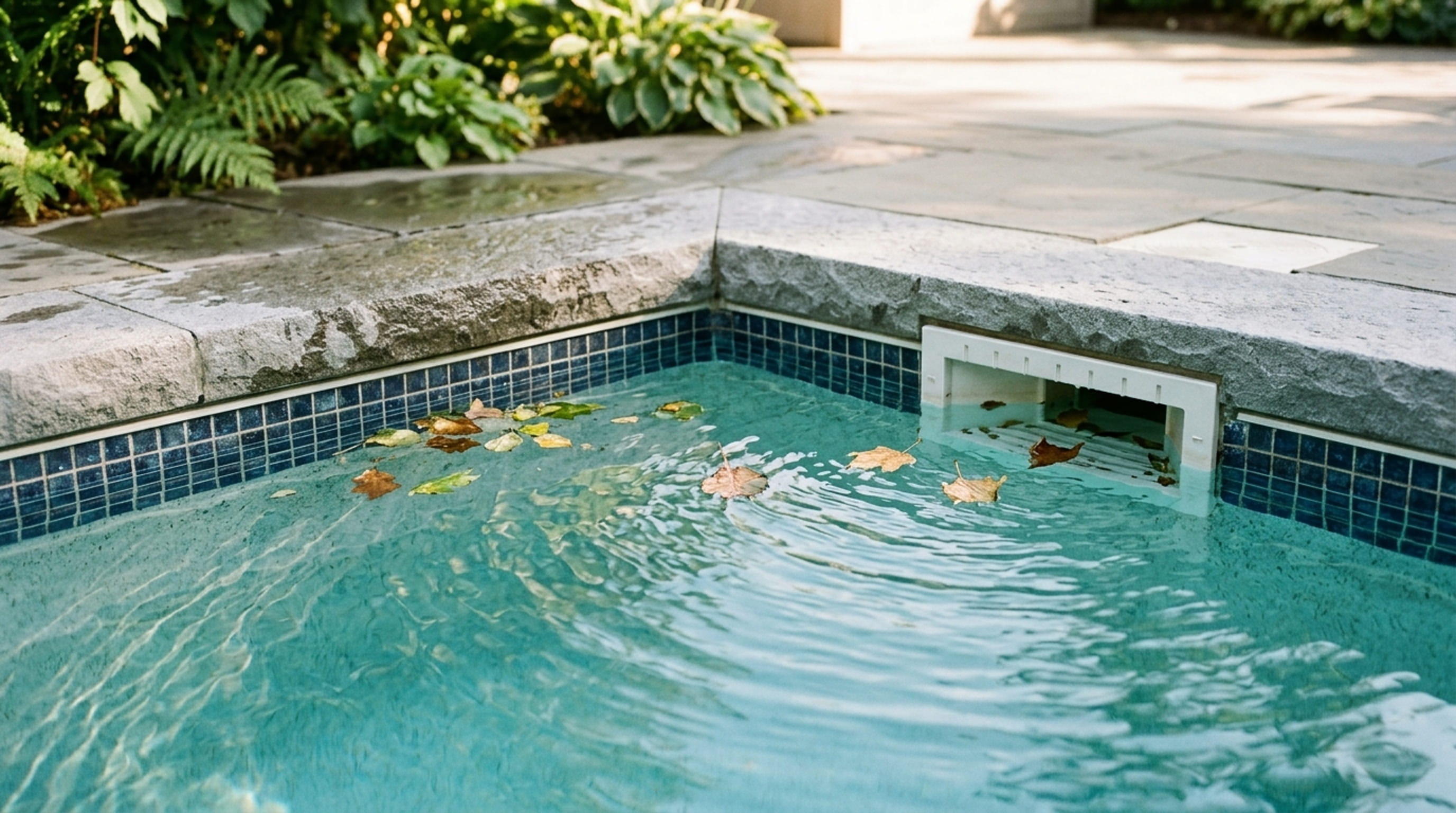
Your pool skimmer is one of the first lines of defense against leaves, insects, dirt, and other floating debris. As water enters the skimmer, debris is collected before the water continues through the pump and filtration system.
Because skimmers are built into the pool structure and connected to the plumbing system, damage can create problems beyond a basket full of leaves. Cracks, leaks, deteriorating components, and poor suction can contribute to water loss and inefficient circulation.
Knowing when a skimmer needs attention can help you address problems before they become more difficult to repair.
What Does a Pool Skimmer Do?
The skimmer pulls water from the surface of your pool and directs it toward the filtration system. This process helps remove floating debris before it sinks to the bottom.
A properly operating skimmer helps:
- Remove leaves and insects
- Improve surface circulation
- Support filtration
- Keep debris away from the pool floor
- Maintain consistent water movement
When the skimmer isn't working correctly, you may notice more debris and changes in overall circulation.
Signs Your Pool Skimmer May Need Replacement
Some skimmer problems can be repaired, while others may require replacing the damaged unit. Here are several warning signs worth watching.
Visible Cracks Around the Skimmer
Cracks in the skimmer body or surrounding area can allow water to escape.
Small cracks may initially appear harmless, but continued movement and exposure to water can make the damage worse.
Unexplained Water Loss
If your pool requires frequent refilling, a leaking skimmer connection could be responsible.
Water loss can come from many areas, so proper leak detection is important before making repairs.
Weak Skimmer Suction
A skimmer that barely pulls water or debris may indicate a blockage, plumbing issue, valve problem, or damage to the skimmer itself.
Professional diagnosis can determine whether the skimmer or another circulation component is causing the problem.
Damage Around the Skimmer Opening
Separation, cracking, or deterioration where the skimmer meets the pool can create a path for leaks.
Addressing structural problems early may help prevent further damage around the pool wall.
Recurring Air in the Pump
If air repeatedly enters the circulation system, a suction-side leak may be present. Depending on the location, the skimmer or its plumbing connections could be involved.
Repair or Replace the Skimmer?
Not every problem requires complete skimmer replacement.
Minor leaks around fittings or certain connection points may be repairable. However, severely cracked or deteriorated skimmer bodies may require replacement for a more reliable long-term solution.
The right approach depends on the skimmer's condition, the source of the leak, and the surrounding pool structure.
Why Professional Skimmer Service Matters
Pool skimmer replacement involves more than removing an old component and installing a new one. The skimmer must connect properly to the existing plumbing and pool structure while maintaining a watertight seal.
A&N Pool Solutions can inspect the skimmer, evaluate surrounding components, and identify the source of circulation or water-loss problems. Accurate diagnosis helps ensure you're repairing the actual issue rather than guessing based on symptoms.
Keep Your Pool Circulating Properly
A healthy skimmer supports cleaner water and efficient circulation. Addressing cracks, leaks, and suction problems promptly can help protect the rest of your pool system while reducing unnecessary water loss.


